
Quick Overview
If you’re searching for a dish that perfectly balances heat and sweetness, look no further than Sweet And Spicy Korean Gochujang Noodles. This vibrant recipe is both simple and satisfying, making it an ideal choice for a quick weeknight dinner or a delightful gathering with friends. With the unique flavor profile of gochujang sauce as the star ingredient, these noodles promise to tantalize your taste buds while being easy to prepare at home.
Ingredient Breakdown
Noodles
For this recipe, you can use any type of noodles you prefer; however, traditional Korean wheat noodles or rice noodles work best. You will need about 8 ounces (225 grams) to make two generous servings. The noodles provide the perfect base to absorb all the delicious flavors from the sauce.
Gochujang
Gochujang is a Korean chili paste made from fermented soybeans, glutinous rice, and red chili powder. You will need 3 tablespoons for this recipe. This ingredient adds depth and gives the dish its signature sweet and spicy flavor profile.
Soy Sauce
Soy sauce adds umami richness to the dish. Use 2 tablespoons of low-sodium soy sauce to enhance the overall taste without overpowering it. It complements the gochujang beautifully while keeping sodium levels manageable.
Honey
Honey offers natural sweetness that balances out the heat from gochujang. For this recipe, you’ll need 1 tablespoon of honey. Its viscosity helps coat the noodles while adding a lovely shine.
Garlic
Fresh garlic provides aromatic flavors that elevate your dish. You will require 2 cloves minced for optimal flavor infusion. Garlic also contributes health benefits, making this dish not only tasty but nutritious as well.
Sesame Oil
Sesame oil introduces a nutty aroma that rounds out the flavor profile perfectly. Use 1 tablespoon of toasted sesame oil for that extra depth. It also helps prevent sticking while cooking your ingredients together.
Green Onions
Finely chopped green onions add freshness and crunch as a garnish. Use 2 stalks in total; they not only enhance aesthetics but also contribute mild onion flavor that pairs wonderfully with the other components.

Step By step Recipe: Sweet And Spicy Korean Gochujang Noodles
Step 1: Cook the Noodles
Start by boiling water in a large pot over high heat. Add your chosen noodles and cook according to package instructions until they reach al dente texture, usually around 4–6 minutes depending on thickness. Drain the noodles and rinse them under cold water to stop cooking; set them aside in a bowl.
Step 2: Prepare the Sauce
In a separate bowl, combine 3 tablespoons of gochujang, 2 tablespoons of low-sodium soy sauce, and 1 tablespoon of honey. Stir well until you achieve a smooth mixture; this will serve as your flavorful sauce base that ties all elements together beautifully.
Step 3: Sauté Garlic
Heat a non-stick skillet over medium heat and add 1 tablespoon of sesame oil. Once hot, add minced garlic (2 cloves) and sauté for about 1–2 minutes until fragrant but not browned; this step is crucial as it infuses oil with garlic flavor without bitterness.
Step 4: Combine Everything
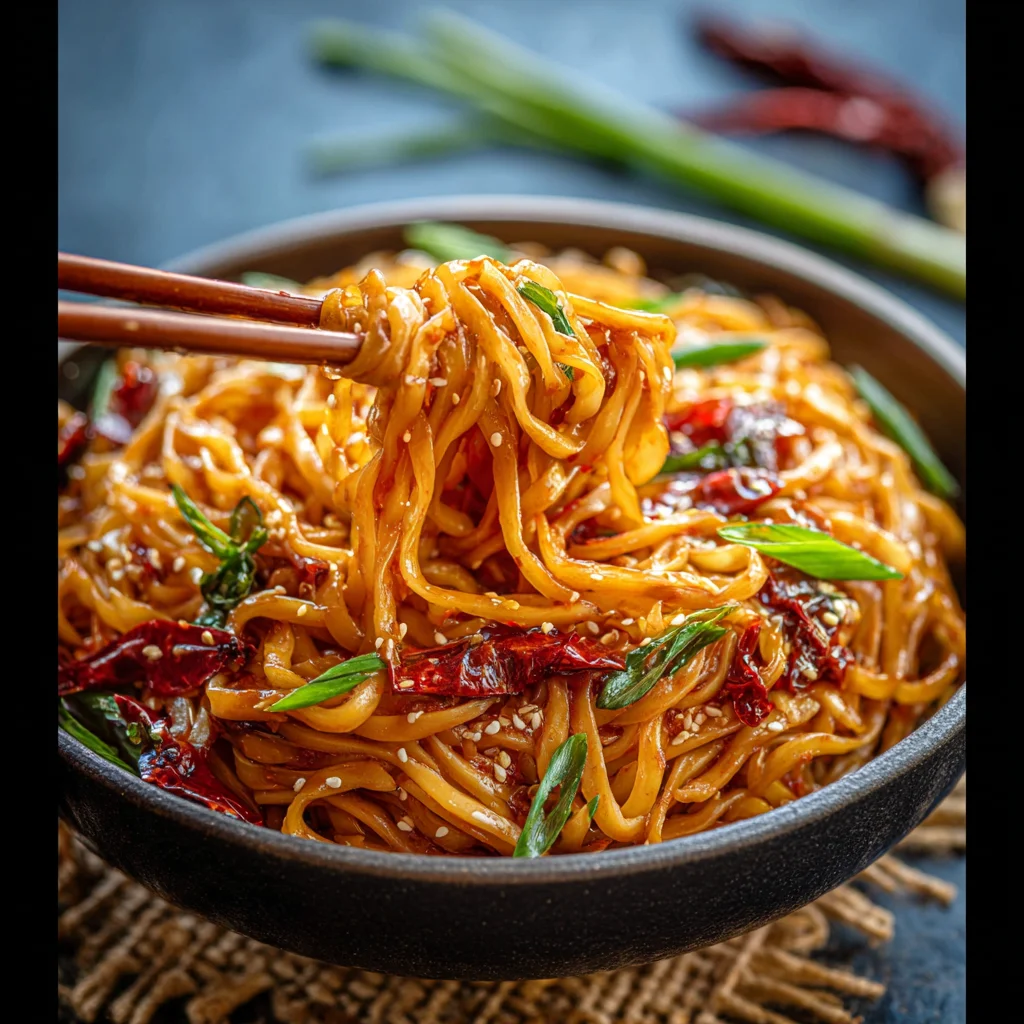
Add cooked noodles into the skillet with sautéed garlic followed by your prepared sauce mixture from step two. Toss everything together gently using tongs or chopsticks until each noodle is well coated in that irresistible sweet and spicy mixture; ensure even distribution for best results.
Step 5: Garnish and Serve
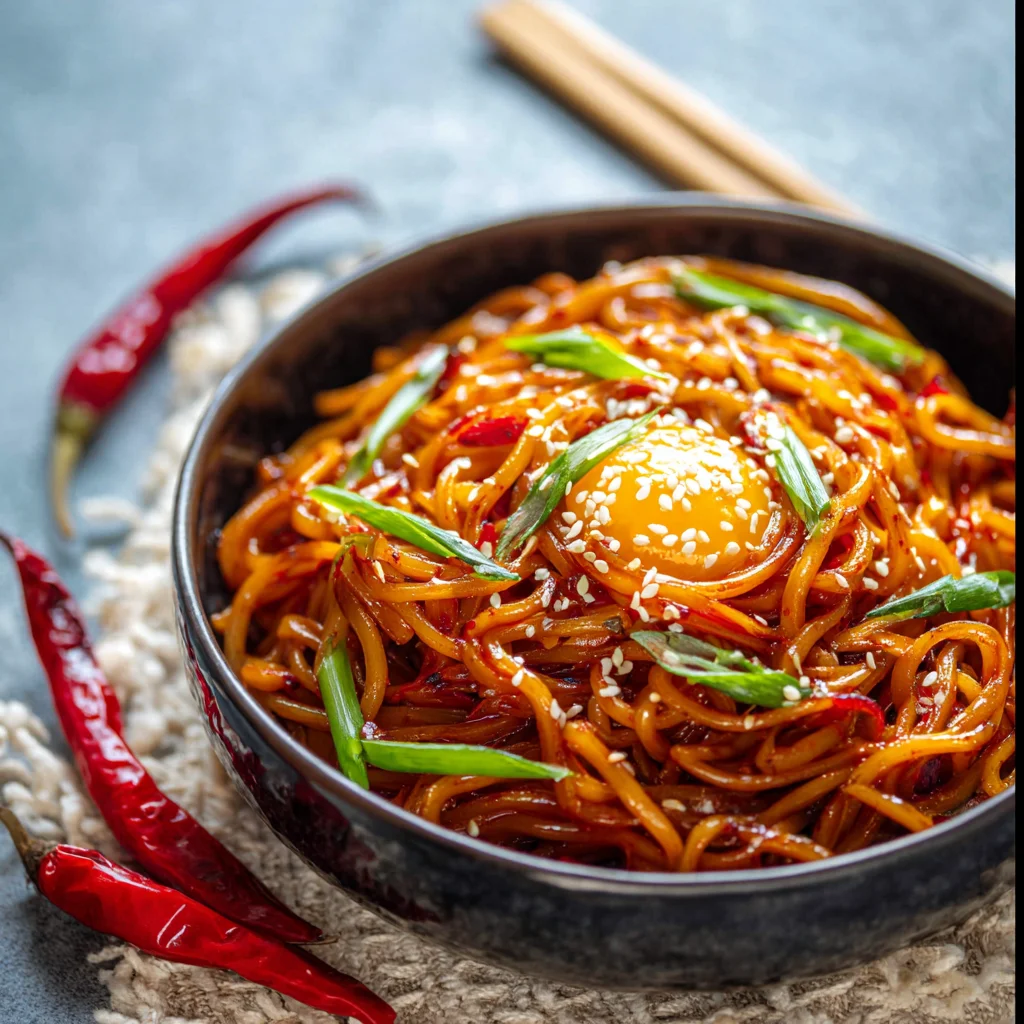
Once thoroughly combined, remove from heat. Transfer your Sweet And Spicy Korean Gochujang Noodles onto serving plates or bowls. Top generously with finely chopped green onions (from ingredient breakdown) for added crunch and visual appeal before serving immediately while hot!
Serving and Storing Tips
Serving Tip
These Sweet And Spicy Korean Gochujang Noodles are best enjoyed fresh off the stove while they retain their warmth and delightful textures. Serve them alongside grilled vegetables or protein options like chicken or tofu for a complete meal experience that everyone will love.
Storing Tip
If you have leftovers, store them in an airtight container in the refrigerator for up to three days maximum. To reheat effectively without drying out noodles too much, consider microwaving with a splash of water or vegetable broth covered with a lid until warmed through again before serving!
Mistakes to avoid
When preparing Sweet And Spicy Korean Gochujang Noodles, one common mistake is using too much gochujang. This can overpower the dish, making it excessively spicy. Stick to the recommended amount and adjust gradually if you prefer more heat. Another mistake is overcooking the noodles. Soft and mushy noodles will ruin the texture of your dish. Always follow the cooking time on the package and taste-test a minute before they are supposed to be done. Lastly, don’t forget to balance flavors. Too much sweetness or spice without savory elements can lead to an unbalanced dish.

Tips and tricks
To create the perfect bowl of Sweet And Spicy Korean Gochujang Noodles, start with high-quality ingredients. Fresh vegetables like bell peppers and carrots not only add color but also texture. Incorporate protein such as chicken, tofu, or shrimp for a heartier meal. When mixing the sauce, whisk together gochujang, soy sauce, sesame oil, and a splash of rice vinegar for depth of flavor. If you want added crunch, consider topping your noodles with sesame seeds or chopped scallions right before serving. Lastly, allow your dish to rest for a few minutes after cooking; this helps all the flavors meld beautifully.
Suggestions for Sweet And Spicy Korean Gochujang Noodles
For those looking to switch up their Sweet And Spicy Korean Gochujang Noodles, consider adding different proteins like tempeh or beef for variety. You can also experiment with various vegetables such as zucchini or snap peas that cook quickly and retain their crunchiness. For a unique twist, try incorporating nuts like cashews or peanuts for a creamy texture that complements the spiciness. If you’re serving guests who may not handle heat well, offer additional toppings like lime wedges or yogurt on the side for balancing flavors.
FAQs
What are Sweet And Spicy Korean Gochujang Noodles?
Sweet And Spicy Korean Gochujang Noodles are a flavorful dish featuring wheat noodles tossed in a spicy-sweet gochujang sauce. This Korean chili paste provides heat along with a touch of sweetness from sugar or honey, creating a balanced flavor profile that tantalizes taste buds.
How can I make my Sweet And Spicy Korean Gochujang Noodles less spicy?
To reduce spiciness in your Sweet And Spicy Korean Gochujang Noodles, start by using less gochujang in your sauce mixture. You can also add more sugar or honey to counterbalance heat levels effectively. Additionally, incorporating creamy ingredients like yogurt or coconut milk helps tone down spiciness.
Can I use any type of noodle for this recipe?
Yes! While traditional recipes often use wheat noodles, you can substitute them with rice noodles or even vegetable-based alternatives if you prefer gluten-free options. Just ensure they cook properly according to package instructions for best results.
How do I store leftover Sweet And Spicy Korean Gochujang Noodles?
Store any leftover Sweet And Spicy Korean Gochujang Noodles in an airtight container in the refrigerator for up to three days. When reheating, add a splash of water or broth to prevent drying out and ensure even heating throughout.
What vegetables pair well with these noodles?
Vegetables like bell peppers, carrots, spinach, and snap peas blend nicely into Sweet And Spicy Korean Gochujang Noodles. These options not only contribute vibrant colors but also enhance nutritional value while complementing the overall flavor profile.
Can I make this dish vegan-friendly?
Absolutely! To make Sweet And Spicy Korean Gochujang Noodles vegan-friendly, simply replace any meat with plant-based protein such as tofu or tempeh and ensure your sauces do not contain animal products. This way, everyone can enjoy this delicious meal!
Summary
In summary, crafting delightful Sweet And Spicy Korean Gochujang Noodles involves careful ingredient selection and attention to detail during preparation. Avoid common mistakes such as overcooking noodles and overpowering flavors while embracing tips like incorporating fresh veggies and proteins for variety. With proper storage techniques and creative adaptations for dietary preferences, this delicious dish remains versatile and enjoyable for everyone!